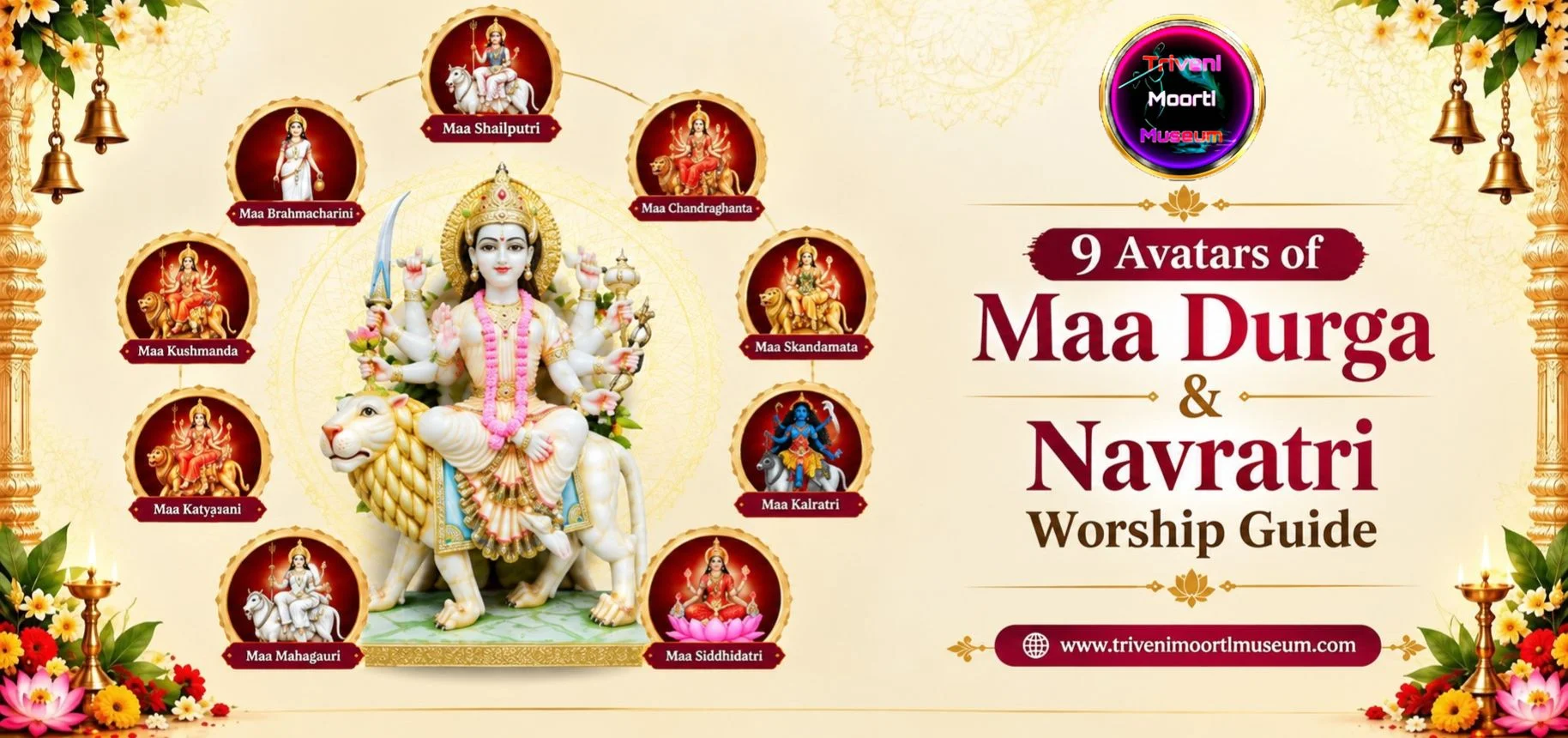
9 Avatars of Maa Durga & Navratri Worship Guide
Navratri is a popular Hindu festival that worships the Goddess Maa Durga and her nine avatars (Navadurga). All her nine incarnations show a different quality of the Goddess and are worshipped by devotees over the nine days of Navratri, which in turn creates a holy space of Devi Maa with dedication in temples as well as in homes.
A detailed and intricately designed Devi Maa Durga marble murti at home makes a perfect addition to the sacred altar, and when looking for a traditional idol, devotees select craftsmanship, marble quality, and fine detailing from the best marble statue maker.
9 Avatars of Maa Durga
The nine avatars of Maa Durga are worshipped during the nine days of Navratri, with each form representing distinct qualities and symbolism.
1. Maa Shailputri
Maa Shailputri is worshipped on the first day of Navratri. She is thought to be the daughter of the Himalayas and is normally depicted sitting on a bull with a trishula (trident) and a lotus flower.
2. Maa Brahmacharini
The deity Brahmacharini is worshiped on the second day. It is understood she often appears carrying a rosary and a kamandalu. Her auspicious form signifies dedication, discipline, patience, and perseverance on the spiritual journey.
3. Maa Chandraghanta
On the third day, it is Maa Chandraghanta. Her name is said to be derived from her forehead, where the moon is depicted on her head. She is said to be portrayed with several arms and is a symbol of valour, peace, and protection.
4. Maa Kushmanda
Maa Kushmanda is worshipped on the fourth day of Navratri. Maa Kushmanda is known as the Goddess of Creativity. She embodies the power of creating the universe. Her bright face is the embodiment of life and positive energy.
5. Maa Skandamata
Celebration on the fifth day honors Maa Skandamata. She is traditionally depicted holding her son Skanda also known as Kartikeya. She embodies motherhood, love, and nurturing. The followers ask for the happiness of their families and peace of mind.
6. Maa Katyayani
Maa Katyayani is worshipped on the sixth day. She is shown as a fierce goddess riding a lion. Her form represents courage, strength and the ability to overcome challenges.
7. Maa Kalaratri
The 7th day is also dedicated to a goddess, Maa Kalaratri. Although her appearance is traditionally described as fierce, Maa Kalaratri is regarded as a powerful and protective form of Maa Durga.
8. Maa Mahagauri
Maa Mahagauri is worshipped on the eighth day of Navratri called Ashtami. Her radiant white appearance traditionally symbolizes purity, peace and spiritual clarity. All devotees offer prayers and pay rituals to her special on this day.
9. Maa Siddhidatri
The ninth and last form of the goddess is named Siddhidatri. Siddhidatri is believed to grant you spiritual knowledge and, above all, heavenly powers.
Navratri Worship Practices for Devotees
Worship during the nine days can include everyday prayers, diya lighting, offerings, flowers, incense, etc., as per family and regional customs. Fasting is practiced for all nine days by some, and mantra chanting, reading scriptures, and temple visits by others. The idol should be kept in a good and clean place. The surroundings can be cleaned regularly, and care can be taken while handling the idol with the marble.
Choosing a Marble Idol for Navratri Worship
Marble idol for home temple. The natural beauty of marble gives your prayer room or a bigger prayer space a more conventional, graceful look. Face attributes, decorations, dresses, and all other icons of this divine symbol are easily achievable with natural marble.
By considering the marble quality, finishing, proportion, carving detail, and overall aesthetics of the idol for the goddess, you can choose the right idol. You can also rely on a reputed marble statue manufacturer to choose from the traditional idols designed for various purposes and spaces.
Conclusion
The 9 forms of Maa Durga, from Maa Shailputri to Maa Siddhidatri, are worshipped during the nine days of Navratri. Each form represents a distinct quality and holds a special place in Hindu devotional traditions. Through prayers, rituals, fasting, and devotion, devotees observe Navratri as a time of spiritual reflection and reverence for Maa Durga.
Trending posts